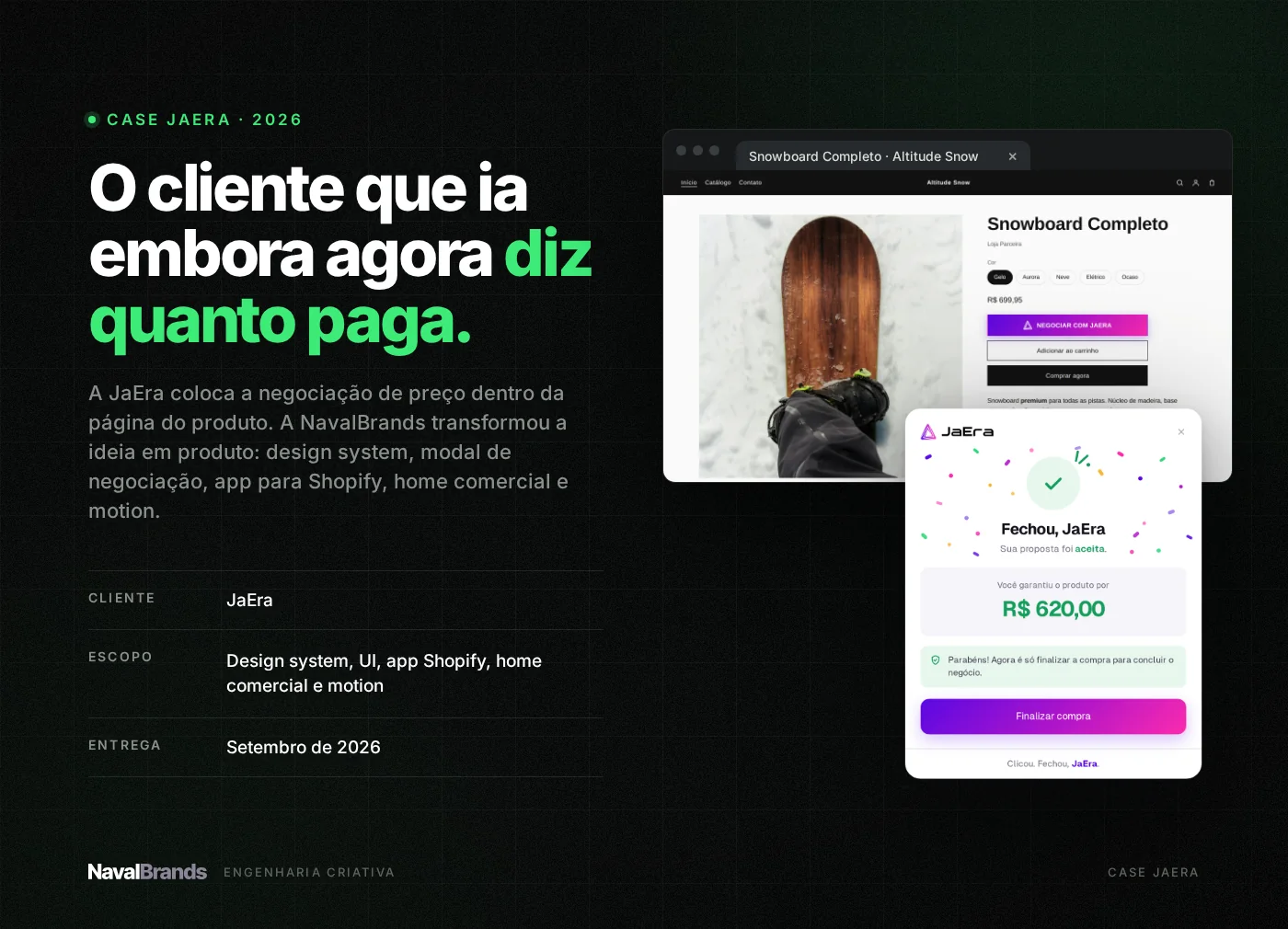
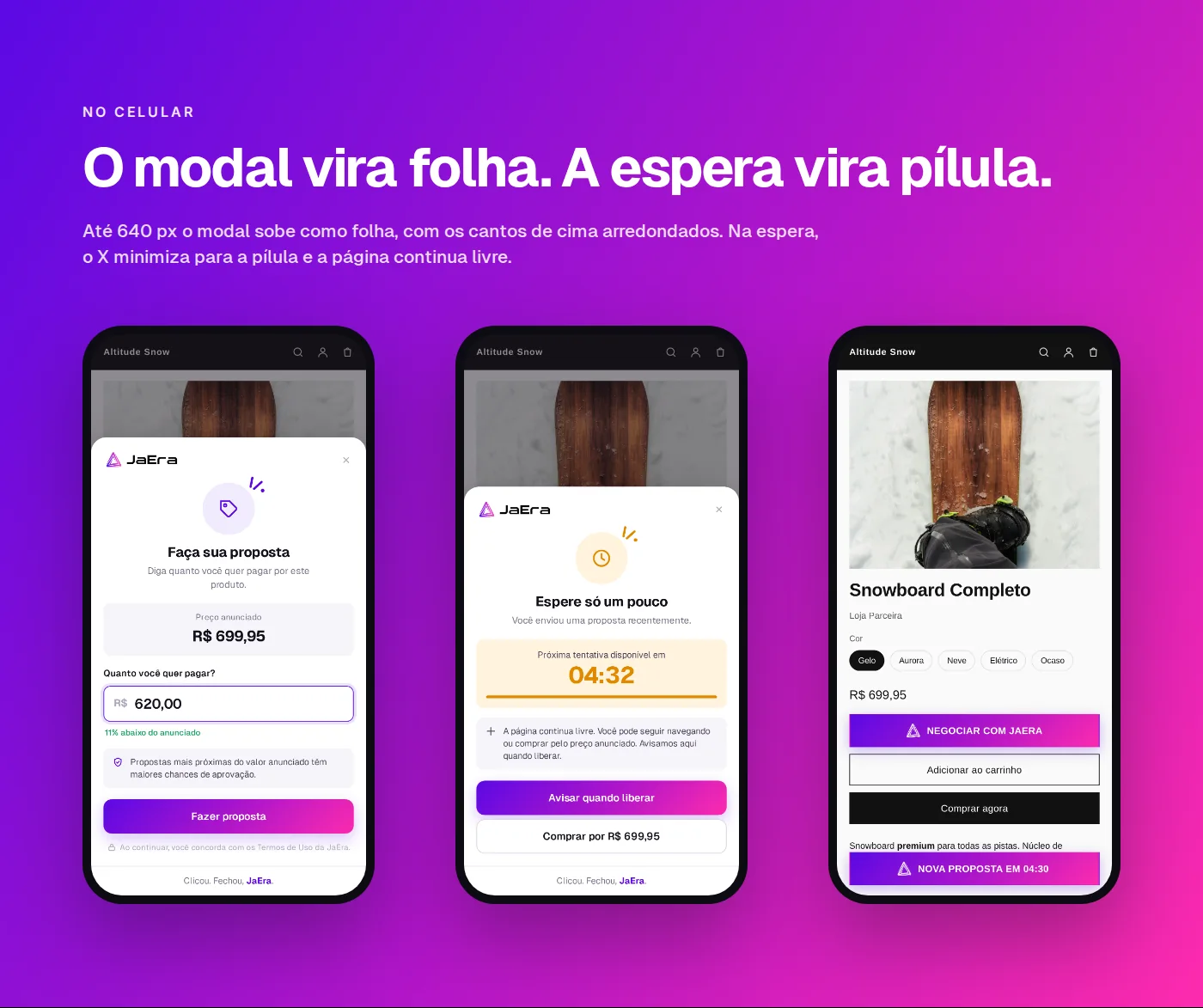
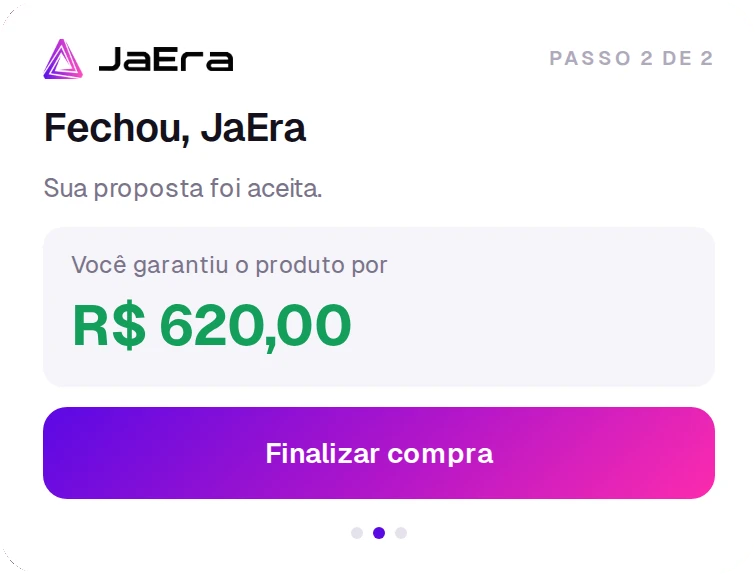
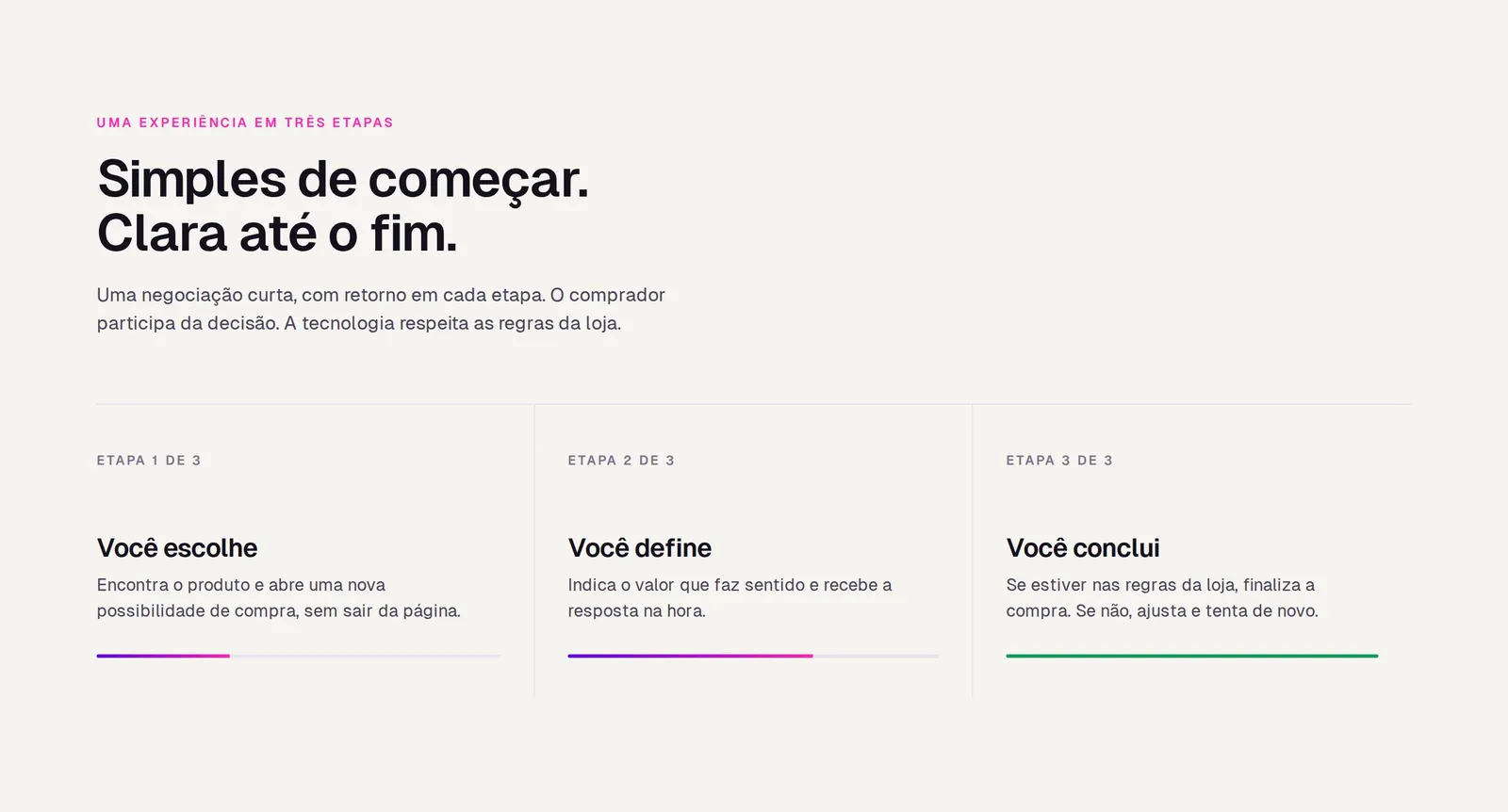
A JaEra coloca a negociação de preço dentro da página do produto. O comprador diz quanto quer pagar, as regras da loja respondem na hora e o preço fechado vai direto para o checkout. A ideia e o slogan já existiam. Faltava transformar isso num produto que vive dentro da loja de outra pessoa, em temas que a JaEra não controla, sem parecer intruso e sem fazer o cliente esperar.
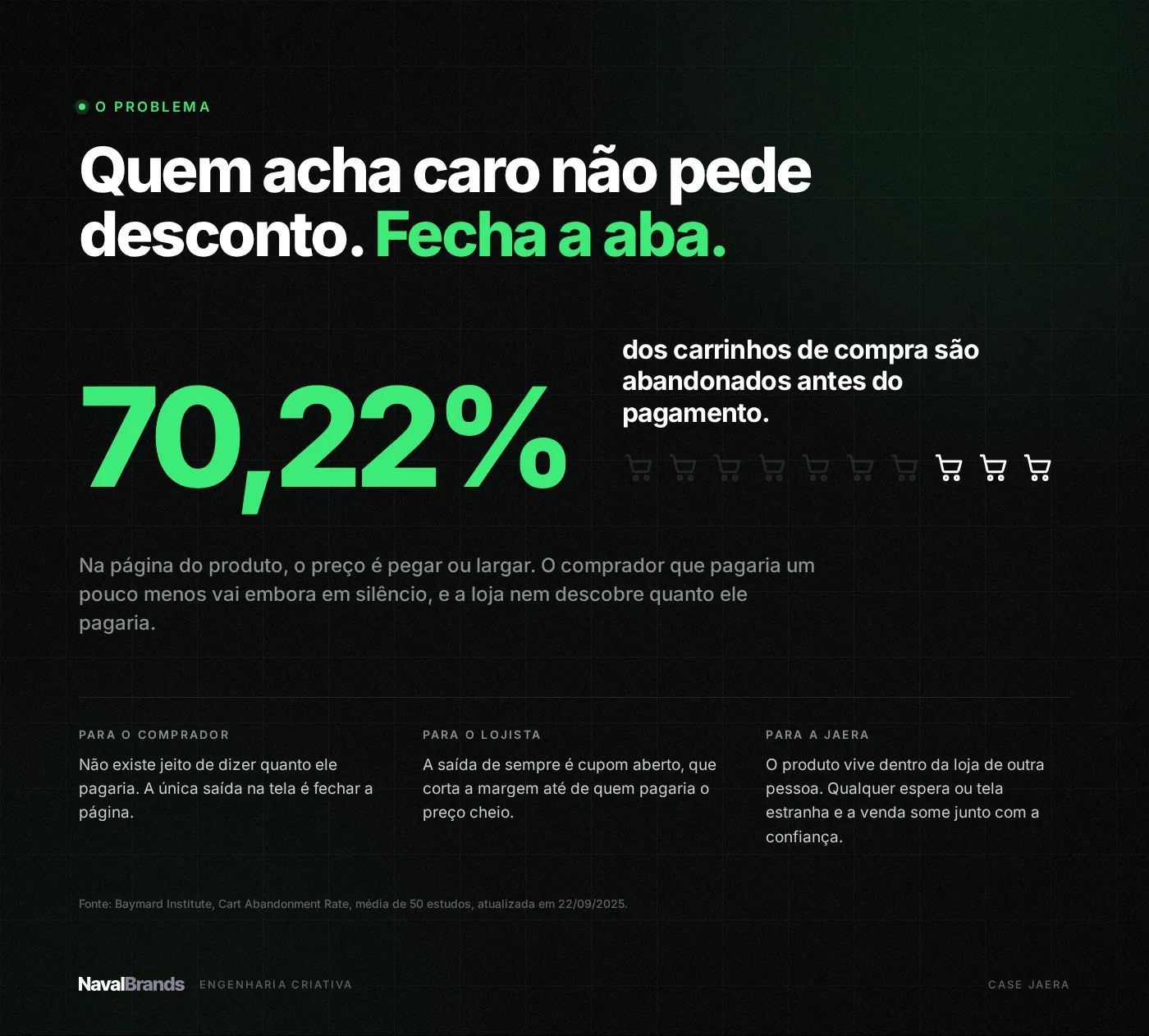
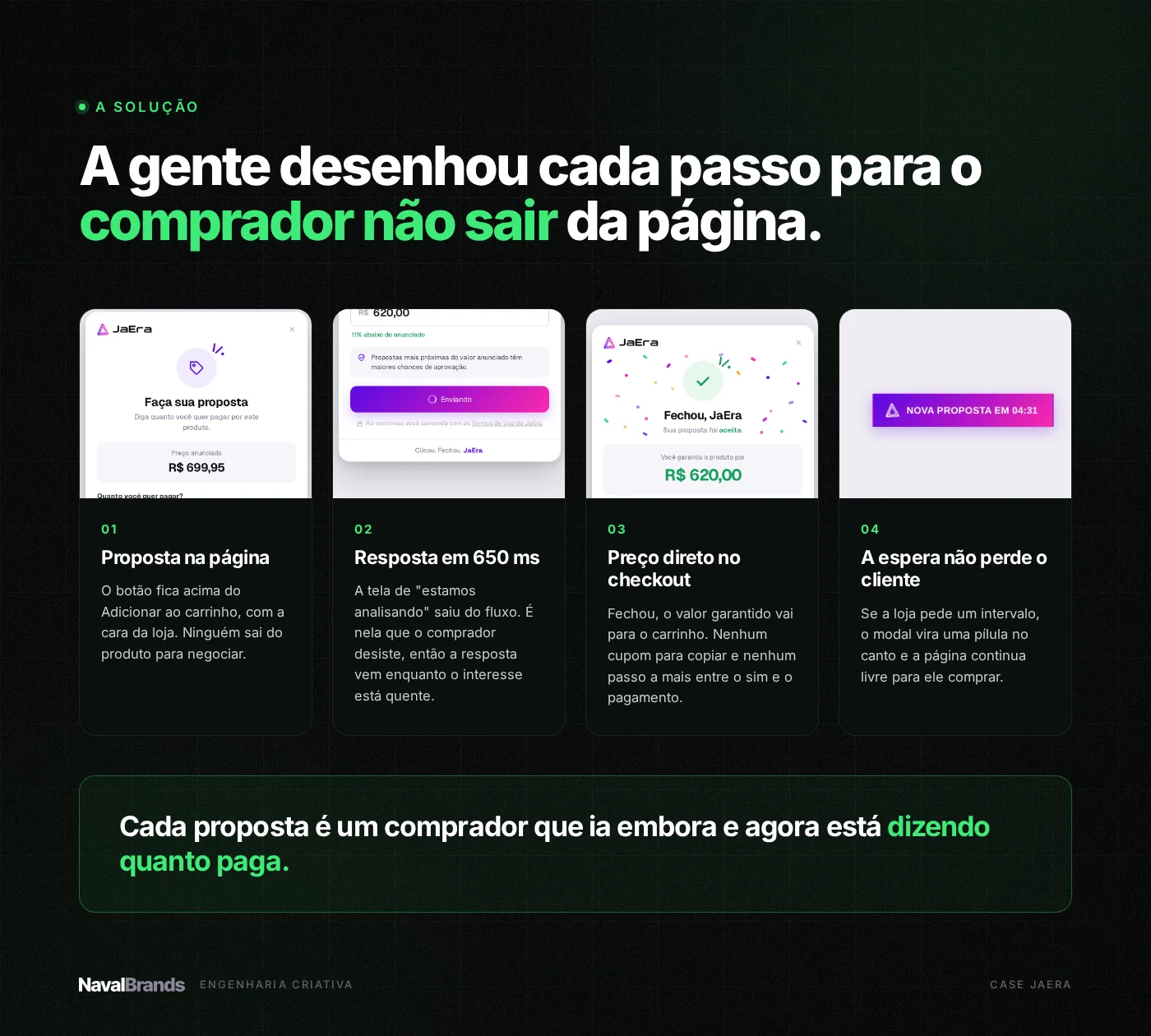
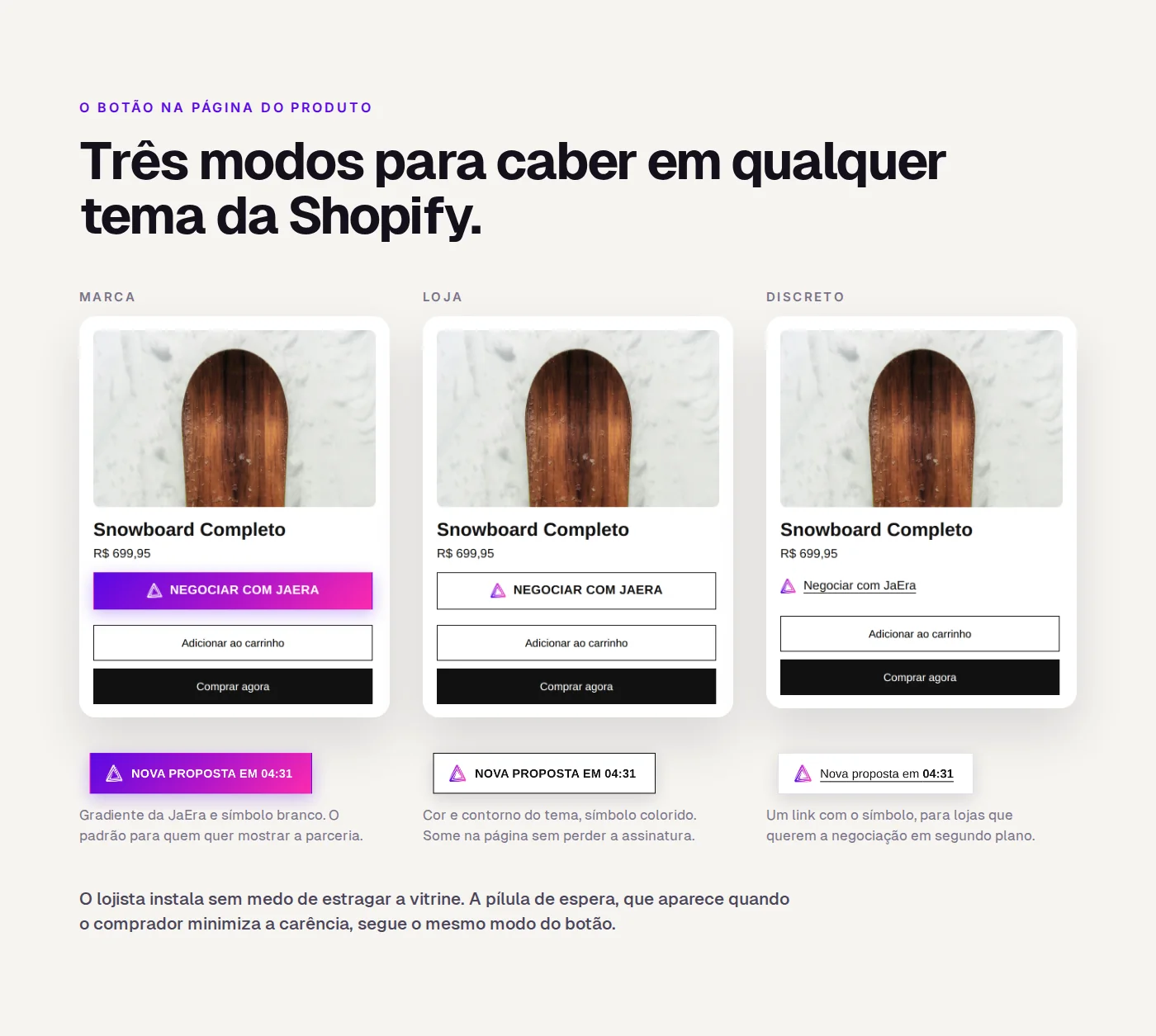
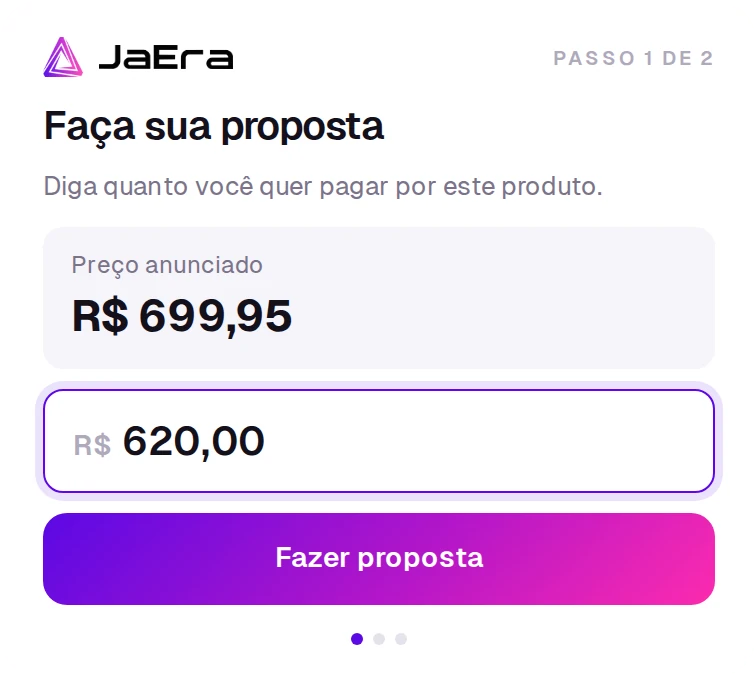
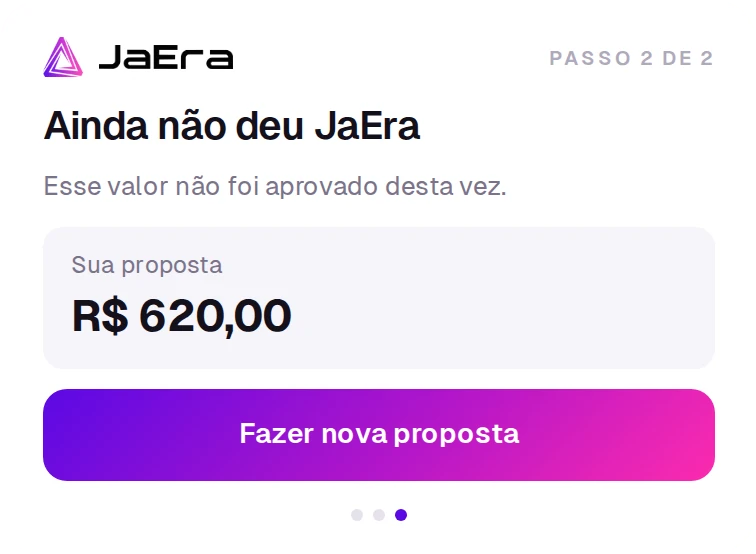
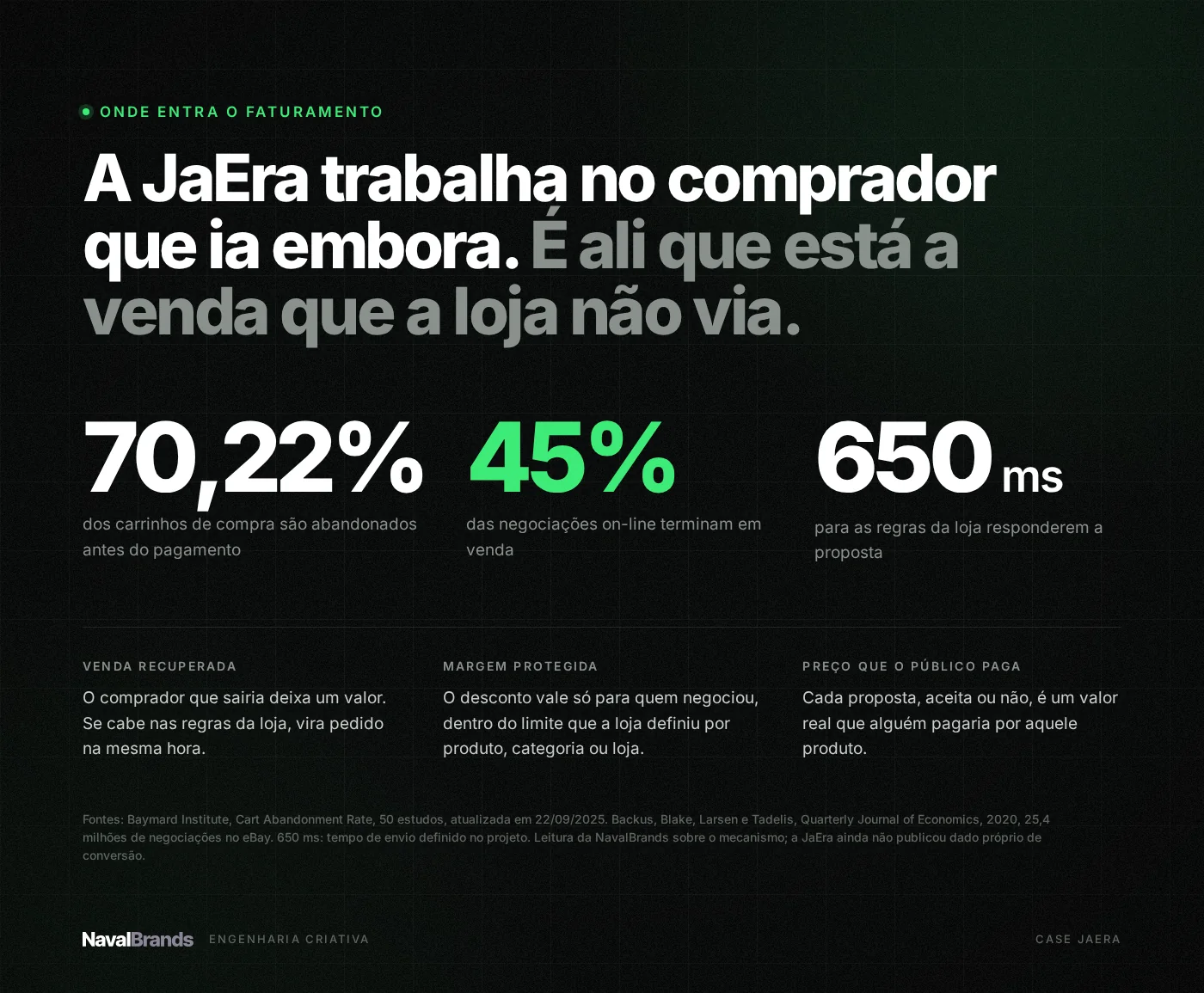
Sete em cada dez carrinhos são abandonados antes do pagamento (Baymard Institute, 2025). Na página do produto, quem acha caro não pede desconto: fecha a aba. A gente desenhou cada passo para o comprador não sair da página. O botão fica acima do Adicionar ao carrinho, com a cara da loja, em três modos. As regras da loja respondem em 650 ms e a tela de análise saiu do fluxo, porque é nela que o comprador desiste. Fechou, o valor vai direto para o checkout, sem cupom para copiar. Não fechou, volta o valor do próprio comprador para ele ajustar, sem expor o mínimo da loja.
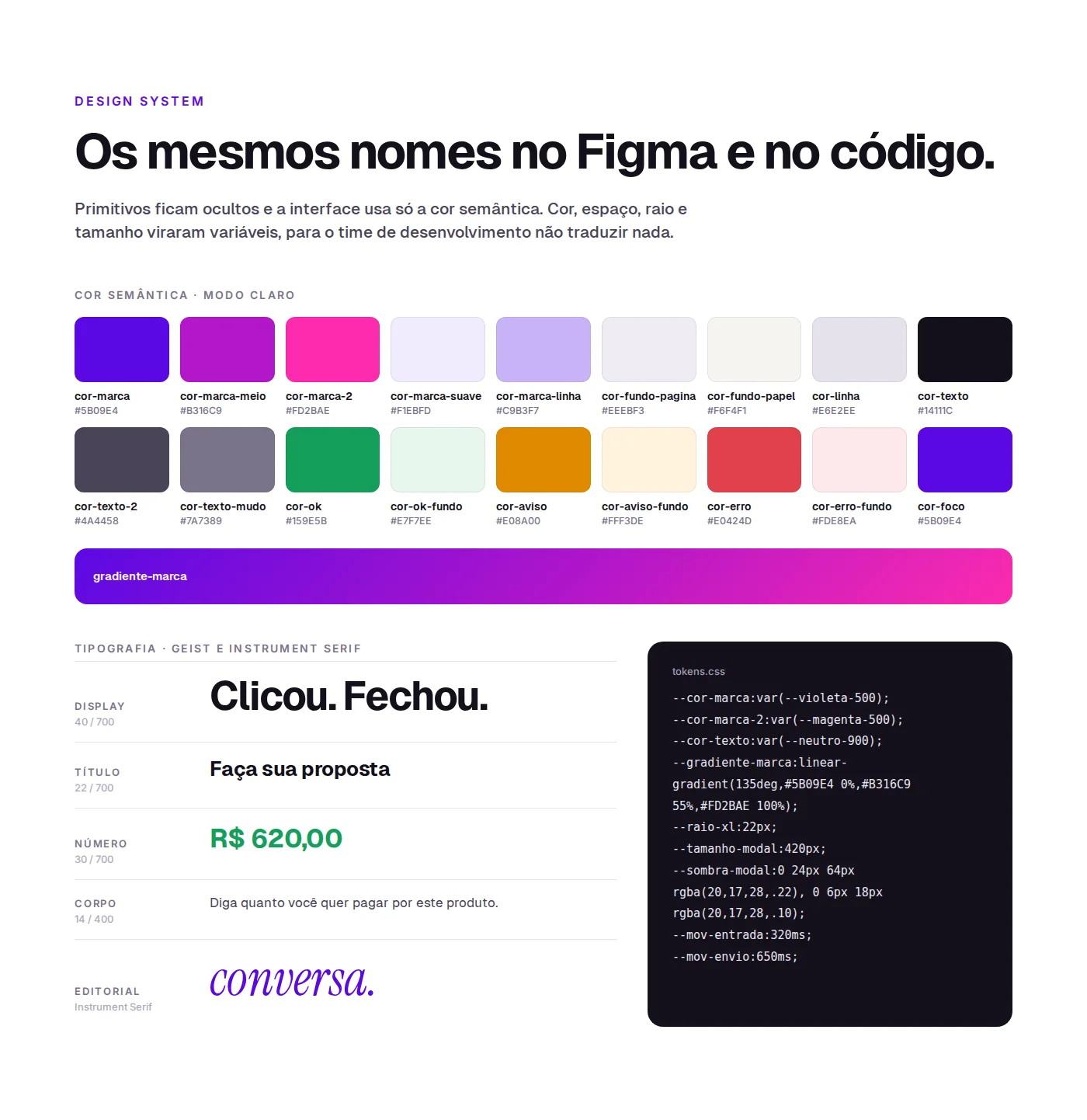
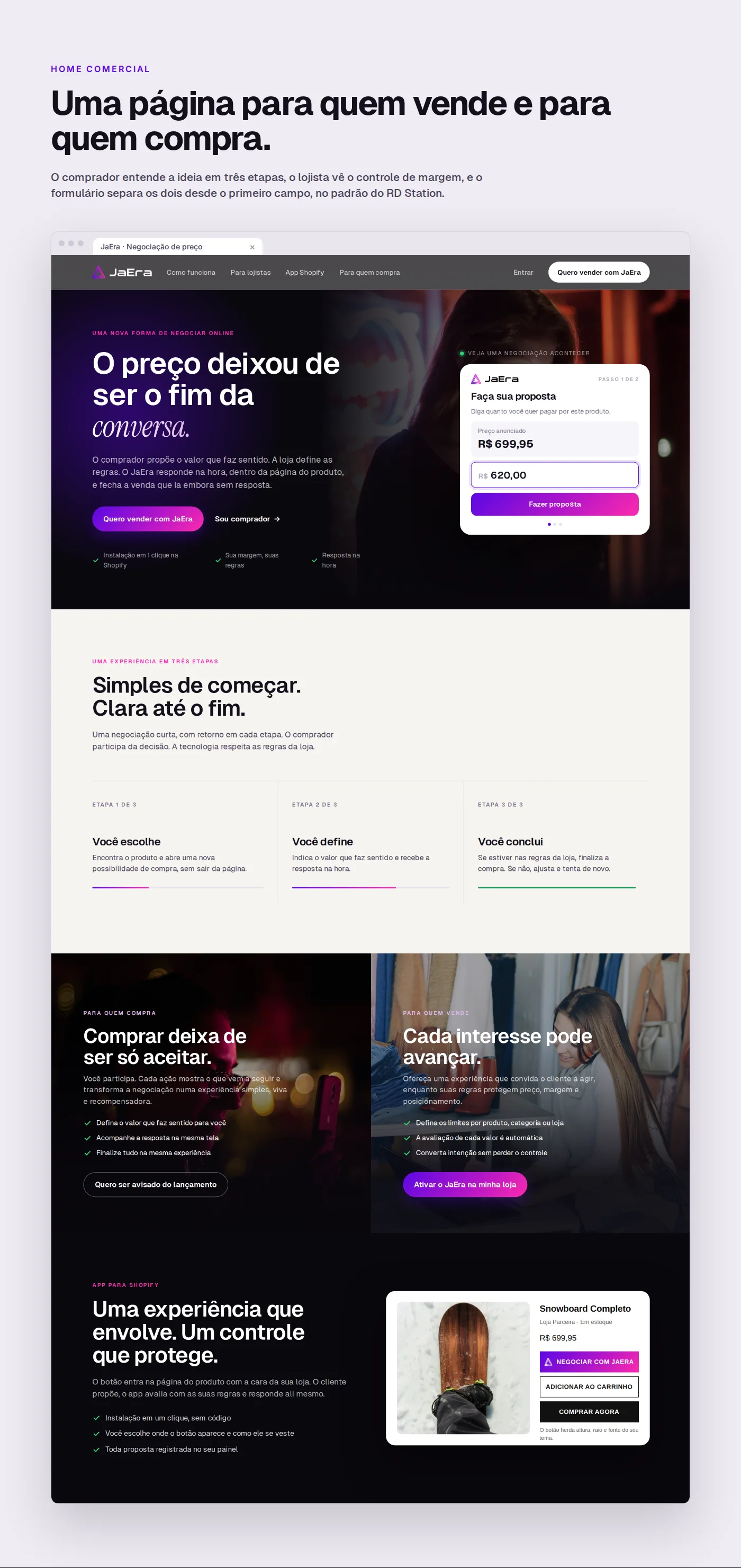
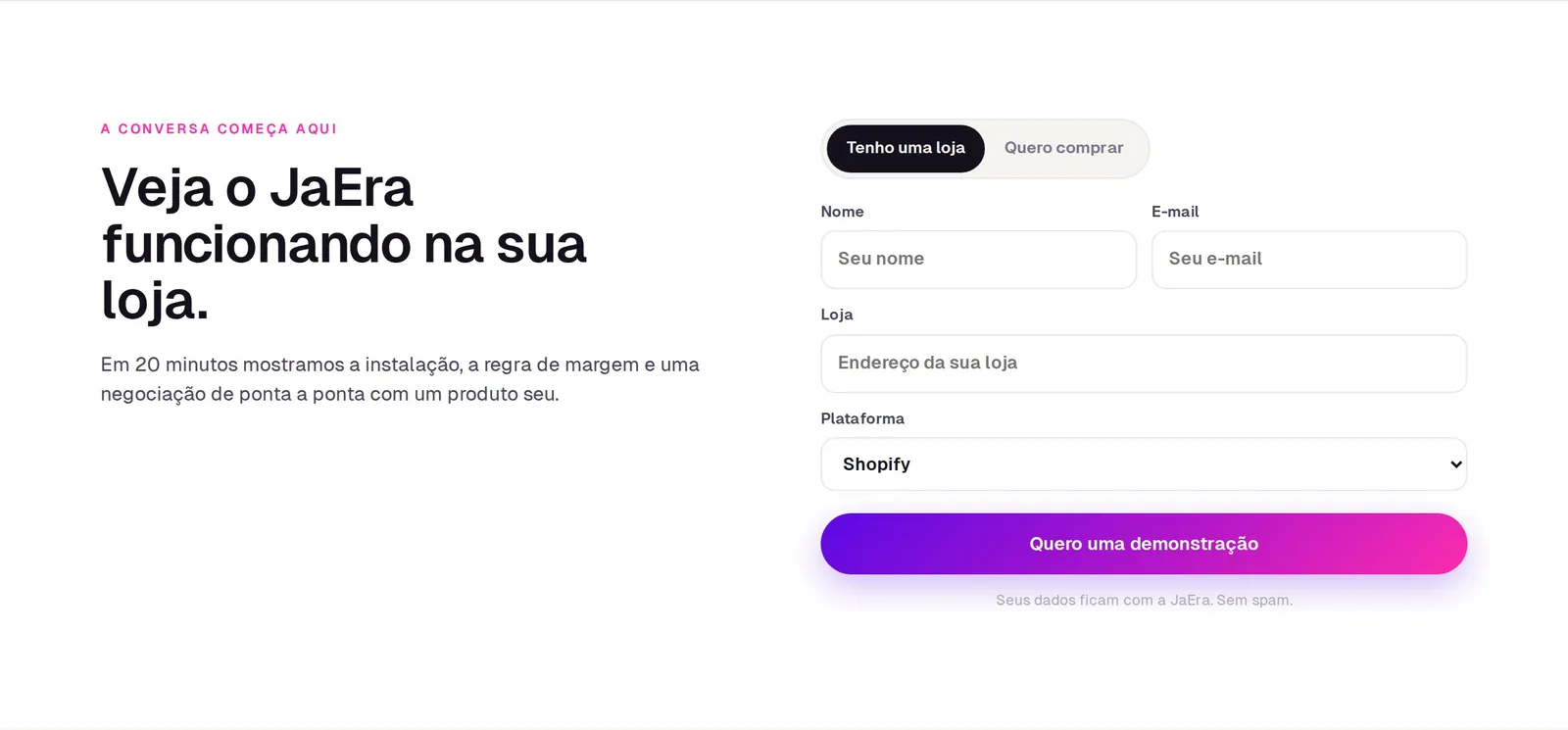
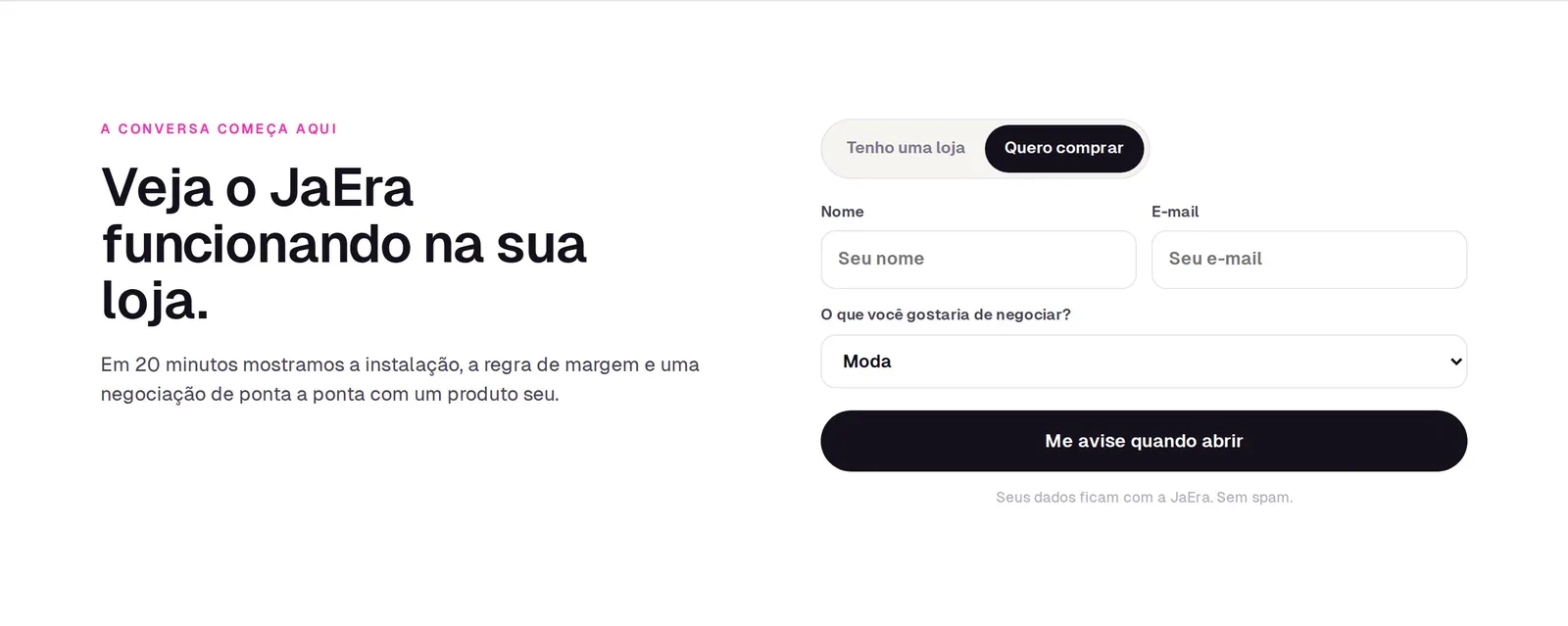
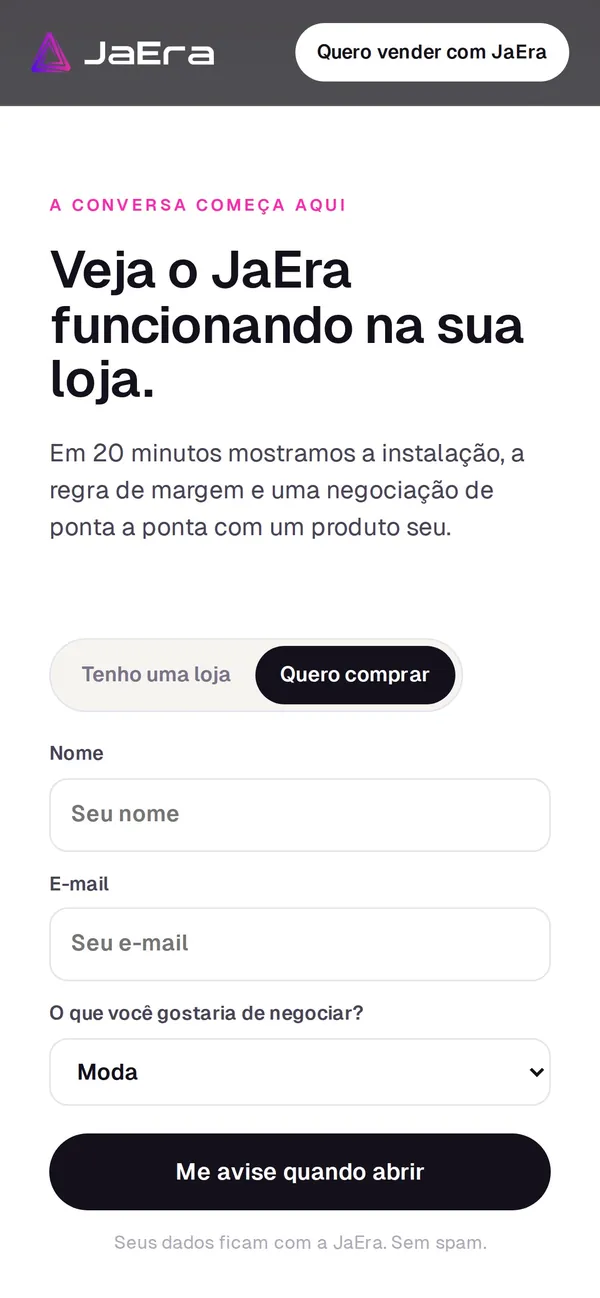
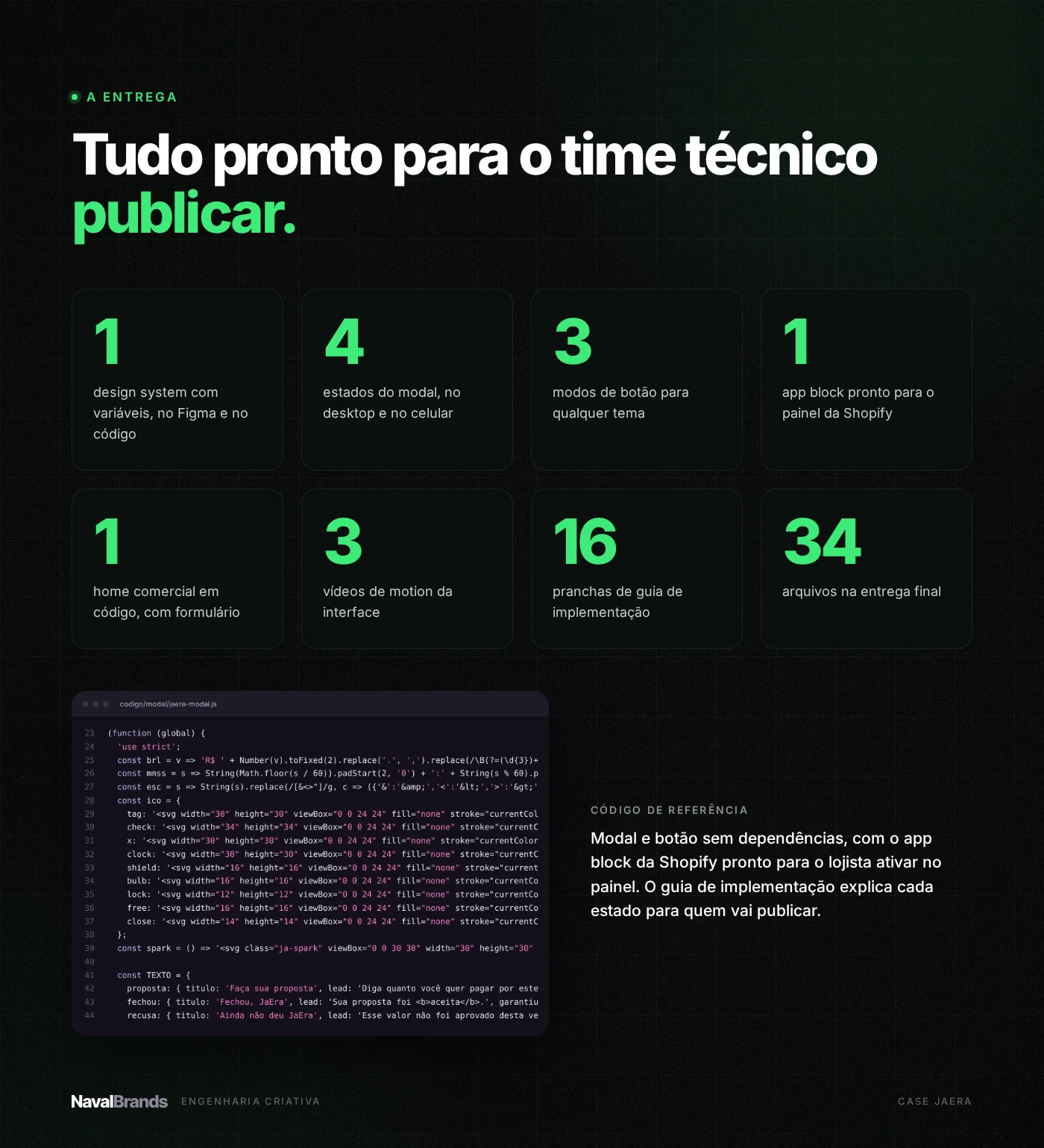
A gente entregou o design system com as mesmas variáveis no Figma e no código, o modal em quatro estados no desktop e no celular, o botão como app block da Shopify, a home comercial em código, três vídeos de movimento e um guia de implementação em 16 pranchas. A home comercial separa os dois públicos desde a primeira dobra: o lojista segue para a demonstração, o comprador para a lista de lançamento, e o formulário, preparado para o RD Station, já separa um lead do outro. Em negociação on-line, 45% das conversas terminam em venda (Quarterly Journal of Economics, 2020). A JaEra ainda não publicou dado próprio de conversão. O ganho está no mecanismo: venda recuperada, margem protegida e o preço real que o público pagaria.
JaEra puts price negotiation inside the product page. The shopper says how much they want to pay, the store rules answer instantly and the agreed price goes straight to checkout. The idea and the tagline already existed. What was missing was turning it into a product that lives inside someone else's store, on themes JaEra does not control, without feeling intrusive and without making the customer wait.
Seven in ten carts are abandoned before payment (Baymard Institute, 2025). On a product page, people who think the price is too high do not ask for a discount: they close the tab. We designed every step so the shopper never leaves the page. The button sits above Add to cart, styled like the store, in three modes. Store rules answer in 650 ms and the review screen was removed from the flow, because that is where shoppers give up. Deal closed, the price goes straight to checkout, no coupon to copy. No deal, the shopper gets their own offer back to adjust, and the store minimum is never exposed.
We delivered the design system with the same variables in Figma and in code, the modal in four states on desktop and mobile, the button as a Shopify app block, the commercial home page in code, three motion videos and a 16 page implementation guide. The commercial home page splits the two audiences from the first fold: merchants head to the demo, shoppers to the launch list, and the form, built to the RD Station field standard, keeps the two kinds of lead apart. In online bargaining, 45% of negotiations end in a sale (Quarterly Journal of Economics, 2020). JaEra has not published its own conversion data yet. The gain is in the mechanism: recovered sales, protected margin and the real price the market would pay.